As it turns out, my aunt had to work when her big sister went into labor with me.
My grandmother attended my mother in the hospital. She and my mother have both passed now.
My grandmother married a dairy farmer in the late 50s in Maryland. Mom was their first child, followed by twins two years later: Jeanie and Eugene.
Aunt Jeanie told me that Mom had a really high fever when she was five or six, and grandfather would not let grandma take her to the doctor. Grandfather had polio as a child. These things go together in my head.
Autism is genetic, and I suspect my mother was autistic and ADHD, like me. Her father may be too. I only met him once, and it made a big impression.
My mother grew up on a dairy farm, getting headaches from the overstimulation of the sun. She grew up with eight younger, noisy, constantly doing things they may or may not be supposed to do, younger siblings.
Aunt Jeanie said Mom was mean to the younger kids until she was a teenager. I was mean to my siblings until I was a teenager. In hindsight, I was still mean in my twenties, until I had Aiden and dedicated myself to learning gentle parenting.
I did not realize I was mean. I thought I was being a proper big sister. I did not understand my meltdowns, not at all. I thought my emotional responses were completely appropriate to my perception of what people had done to me, or not for me.
Stress from overstimulation hits the tipping point in our brains, causing us to meltdown. It happens to all humans when we get stressed enough. All animals have that tipping point.
In my first memoir, I called her Dr. Mom and Mrs. AIDS. I thought PTSD and the terror of the AIDS epidemic made her so quick to anger.
My mother wasn’t evil. She was disabled and needed way more help than she was able to get, even as an air force veteran.
One problem with being autistic is that our faces show our feelings too much, or not at all. Our bodies show our feelings, too much, or not at all. We are all or nothing people and we literally cannot change how we develop differently in the womb or throughout our lives. Our genes are coded that way.
And the part of our brain that allows us to repress our big feelings wears out quickly, especially when we can’t get quiet time to ourselves to recharge.
When I was a child, I thought my mother hated me and would kill me, even though she loved me and was my best friend.
I had my own experiences with her when we were alone to compare to my experiences with her when others were around.
Yesterday I turned 42. My mother died when she was 32.
The memoir I wrote in my twenties was her story, and my story, as I understood it then.
In the last ten years I have experienced homelessness as a single mother with a toddler, lost a baby, lost half of my molars and everything I owned, nearly died several times from lack of healthcare, all because I had more education than help.
I earned an MFA during all of that, then rewrote and published the book. But I was only able to accomplish those big goals when an individual, who was not a sexual partner, loved me enough to take care of me and my toddler so I could do those things.
The last chapter of my first memoir is my firstborn’s birth story, the day I gave birth to myself as a mother of a precious, very wanted by me, baby boy.
We’re autistic, he and I. I don’t think that’s anything to be ashamed of. I think people just need to understand, so we can change the stories around our relationships, our perceptions of what is possible, and develop as a unified culture, bonded by mutual care and affection.
There are countries that won’t allow us to immigrate with our diagnosis, because they consider us inferior and dangerous.
We live in Florida, America’s Fascist HQ. A land run by unchecked greed since Disney invented vacation destination.
I never considered aborting my children, and I hate that the right to choose has been stripped from us in my lifetime.
I hate knowing that people in my neighborhood would choose abortion over having a potentially autistic child because children and disabled people are disposable in capitalist-run economies.
All because they don’t get how we’re unable to behave the way they expect us to. All they see is deficits and bad choices, poor behavior, risk.
That’s all I saw with my elitist education. I judged my family from the perspective of a child, a traumatized child who never had a secure attachment until I met mother’s who practice attachment parenting when Aiden was a baby.
My mother chased my father, who had a daughter just a year younger than her. I always thought badly of him for pursuing a child, with that hard line in my mind between child and sex.
And because he shot her. Because my grandmother paid his bail and brought him home to live with us until he was found guilty for shooting my mother, and because I have memories of him from them that made my mom cry when I told her.
I wonder if I could find records of the court cases.
My father was a teen in the 50s. Elvis fell in love with his 13 year old cousin in those hills. My father’s mother was married at 14. This is the culture of the family I was born into, in 1981.
Mom was a teen in the 70s, valedictorian of her class of three in the tiny church school in Hagerstown, Maryland. When her parents divorced, Mom stayed an extra year with her father so she could finish her senior year with her best friend, Rosie.
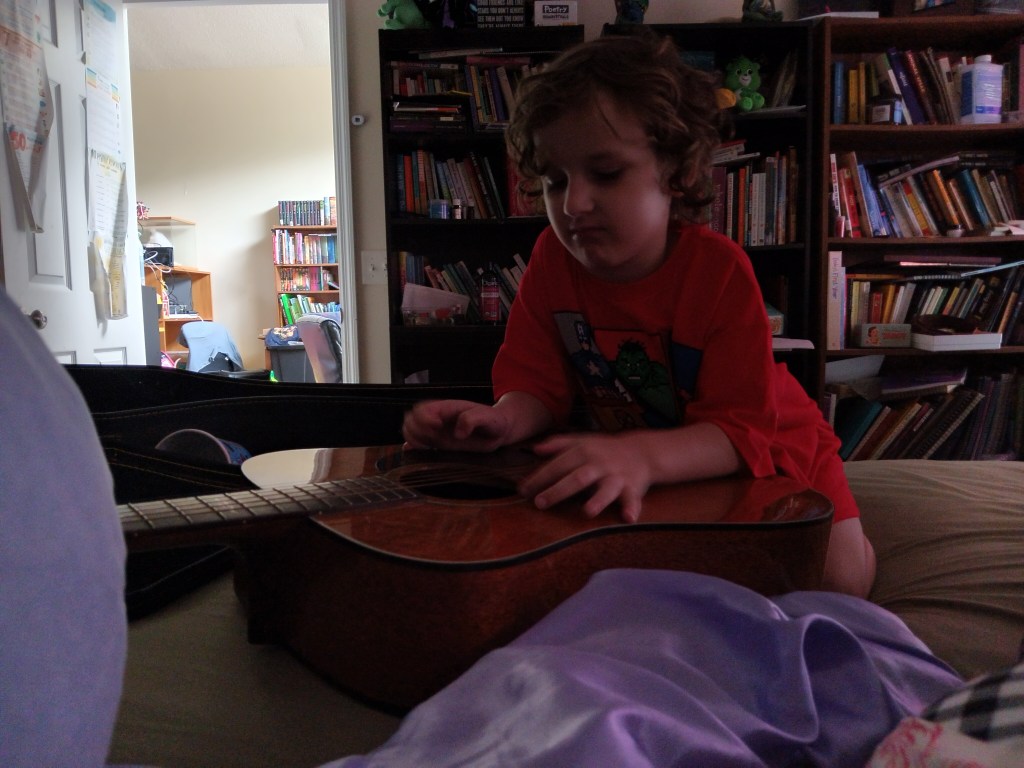
Grandfather played guitar, and Mom sang Gospel with him at church. Girls had to wear dresses and never cut their hair.
Grandfather beat mom with a switch until blood ran down her legs for wearing pants. She wore pants the snowy day she saw him for the last time. But she had me, 9, and my sister, 6, in matching dresses with opaque white tights, to meet our grandfather.
Before they had me, my mother and father would go for rides in the car in the Appalachian mountain roads with Mom’s sister, Jeanie, and Father’s brother, Denny. Jeanie and Denny married, and they would take a dish to each other’s houses, listen to Elvis or Conway Twitty, maybe dance or play around.
I was born in 1981.
Mom gained a lot of weight while pregnant with me, as did I with each of mine. She was in labor with me for three days, and the doctor used a vacuum on my head to assist, bruising me.
They told her, after all that, that they should have performed a C-section.
My son is also autistic. He had an unmedicated home birth, and I was assisted by a wonderful midwife who taught me how to listen to my body.
My first memoir was my story while I was pregnant, wanting to be a better mom to my child than my mother had been to me.
Have I been?
He’s 14 now, and happy, healthy. Creative, playful, and he has a few friends.
He’s not depressed! That’s a win!
But I was horrified to discover I’d inherited my mother’s temper. Terrified my father, who shot her, passed evil genes to me.
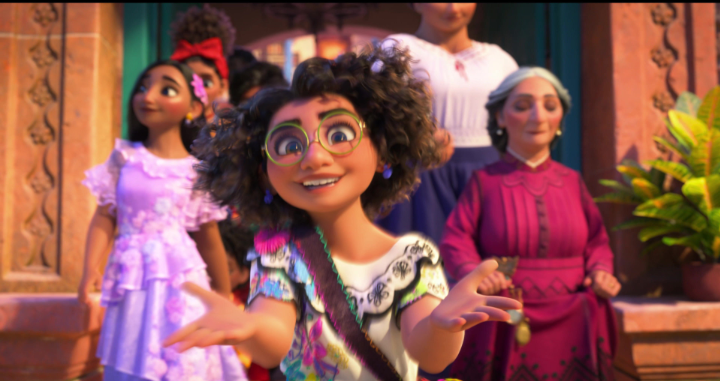
I guess the book I am writing now is inspired in part by Encanto.
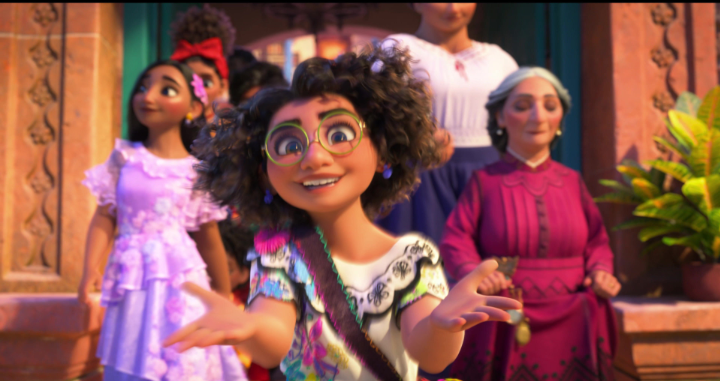
It took me over a year to understand what Mirabel meant at the end, when she looked into the reflection of the doorknob her family made for her. They asked what she saw, and she looks, and her family’s smiling faces reflect back at her, beside her own.
“Me,” she says. “All of me.”
How can I understand my world if I can’t understand the world I came from?
The dark secrets in my family fascinated and horrified me all my life.
And now I see how much I missed by not focussing my curiosity equally on all the good and beautiful experiences that made up the lives of the grown ups I came from.
Did I have to have a teen of my own, and outlive my mother, in order to see her with the compassion and empathy I have for my children?
I asked my aunt if she had any beautiful memories with my mother.
Before I existed, in that liminal young adulthood before becoming mothers, Aunt Jeanie lived at the bottom of Five Mile Mountain. It was fall, huge piles of leaves all over the ground, 1979ish.
That fall, two beautiful teen sisters enjoyed a happy afternoon jumping into huge piles of fall leaves in the Southern Virginia countryside.
 Adventures of an Earthborn Alien